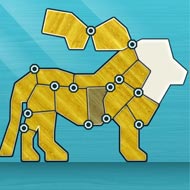
Save the Shapes 2 expands on the original gameplay by introducing more complex puzzles, diverse shape types, and additional mechanics that increase the challenge and depth of each level. Players must continue to fit geometric shapes into designated areas, but the variety of shapes, interactive obstacles, and layered puzzles require more strategic thinking and careful planning. The sequel encourages players to experiment, anticipate shape interactions, and adapt to new constraints as levels grow more intricate.
Advanced Gameplay Mechanics
In Save the Shapes 2, players encounter new mechanics that enhance the complexity of each puzzle. Shapes can now rotate in multiple directions, interact with movable platforms, or trigger environmental effects. Mastery of these mechanics is essential for completing challenging levels efficiently and progressing through increasingly elaborate stages.
- Advanced rotation and placement for more complex shapes
- Shapes that interact with environmental objects
- Trigger mechanisms that unlock new areas
- Levels requiring sequential actions to solve puzzles
Diverse Level Design and Challenges
The levels in Save the Shapes 2 are designed to test different aspects of spatial reasoning and problem-solving. Early levels introduce the new mechanics gradually, while later stages combine multiple elements, including irregular shapes, moving obstacles, and tight time constraints. Players must analyze each puzzle carefully, anticipate shape interactions, and plan sequences to avoid mistakes.
- Levels combining multiple shape types and sizes
- Obstacles that limit movement and placement options
- Time-sensitive sections requiring quick thinking
- Levels designed to encourage experimentation
Strategies and Effective Problem Solving
Players succeed in Save the Shapes 2 by combining careful planning with creative thinking. Experimentation is encouraged to discover optimal arrangements, while observation of shape interactions helps anticipate future moves. Identifying patterns, managing limited space, and sequencing actions correctly are key to solving the most challenging puzzles.
- Visualizing multiple moves ahead before placement
- Testing different approaches to find effective solutions
- Prioritizing the placement of complex or large shapes
- Recognizing patterns to predict shape interactions
Progression, Replayability, and Challenges
Save the Shapes 2 offers a progression that gradually introduces new difficulties and mechanics. Each completed level provides a sense of accomplishment, and players are encouraged to revisit earlier stages to find alternative solutions or improve efficiency. The game’s replay value is enhanced through optional challenges, hidden secrets, and levels that reward experimentation.
- Progressively challenging levels that introduce new mechanics
- Encouragement to replay levels for alternate solutions
- Optional advanced puzzles for additional challenge
- Rewarding experimentation and logical planning
Player Questions and Tips
Players often ask whether speed or careful planning is more important. While certain levels introduce time-sensitive elements, success in Save the Shapes 2 primarily relies on observation, strategy, and anticipation. Players benefit from pausing to evaluate the puzzle, experimenting with placements, and refining their approach after unsuccessful attempts.
- Focus on strategic planning over rushing moves
- Observe shape interactions carefully before committing
- Experiment with different sequences to find optimal solutions
- Learn from previous mistakes to improve efficiency
Save the Shapes 2 builds on the original by offering deeper puzzles, new mechanics, and layered challenges that test spatial reasoning, problem-solving, and planning skills. Players are rewarded for patience, observation, and creative thinking, creating a puzzle experience that is both engaging and progressively more complex as they advance through the game.