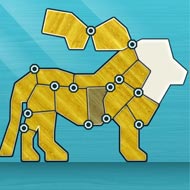
Save the Shapes is a cerebral puzzle experience that tasks players with the precise manipulation and strategic placement of geometric forms into target zones. The core challenge lies in leveraging spatial intelligence, forward-thinking logic, and adaptive problem-solving across a spectrum of levels that escalate in intricacy. Each puzzle demands deliberate planning, anticipation of spatial conflicts, and the clever utilization of each shape’s distinct geometry to secure success.
Core Gameplay Mechanics
The fundamental loop of Save the Shapes centers on the meticulous rotation and positioning of pieces to completely fill outlined areas, leaving no voids. With each new stage, novel shapes, board patterns, and restrictive rules are introduced, compelling players to continuously evolve their tactics. The true test emerges from orchestrating a sequence of placements that avoids irreversible blockages and ensures a clear path to completion.
- Precise rotational control and shape alignment
- Accommodating intricate forms within confined areas
- Strategic sequencing to prevent impassable states
- Evolving complexity through an expanding shape library
Level Design and Challenges
The level architecture in Save the Shapes is crafted to evaluate distinct facets of spatial awareness. Initial stages emphasize foundational placement and orientation, whereas advanced puzzles incorporate asymmetrical shapes, layered constraints, and occasionally, time-pressure elements. Progression hinges on a player’s ability to scan the board, forecast geometric interactions, and execute a carefully ordered plan.
- A curated difficulty curve introducing sophisticated shapes
- Environmental obstacles that limit placement options
- Pace-driven modules that intensify focus
- Open-ended solutions that incentivize creative thinking
Strategies and Problem-Solving Techniques
Mastering Save the Shapes calls for a blend of systematic strategy and iterative experimentation. Effective players often prototype placements mentally, identify recurring geometric patterns, and visualize composite fits. Cultivating a deep understanding of spatial relationships and piece properties is key to unraveling the game’s more demanding challenges with efficiency.
- Mental simulation of piece placement prior to action
- Exploring alternative configurations to find the ideal fit
- Securing placement for the most cumbersome shapes early
- Applying pattern recognition to streamline decision-making
Progression and Replay Value
As expertise grows, Save the Shapes presents increasingly elaborate puzzles that require juggling multiple considerations. Clearing a level delivers a tangible reward in accomplishment, while the diversity of shapes and layouts promotes revisiting puzzles to uncover elegant, alternative solutions. Long-term engagement is bolstered by bonus objectives and the pursuit of personally optimized strategies.
- A layered progression system with deepening complexity
- Active encouragement of multi-solution experimentation
- Expert-tier objectives for seasoned players
- Recognition of meticulous observation and strategic foresight
Player Questions and Tips
A common inquiry is whether Save the Shapes prioritizes quick reflexes or deliberate strategy. While timed elements exist, the essence of the game is rooted in thoughtful placement and deductive reasoning. Victorious players think multiple steps ahead, respect the inherent qualities of each shape, and pivot gracefully when a tactic fails. Practice and attentive analysis foster a more instinctive grasp of the puzzle dynamics.
- Emphasize strategic foresight over hasty actions
- Scrutinize the interplay between shapes and boundaries
- Use trial placements to circumvent gridlock scenarios
- Analyze unsuccessful approaches to hone your methodology
Save the Shapes delivers a compelling and intellectually stimulating puzzle journey that prioritizes spatial reasoning, tactical planning, and acute observation. It rewards patience, ingenuity, and logical structuring, transforming each level into a satisfying measure of one’s skill, foresight, and adaptability amid a growing cascade of geometric conundrums.