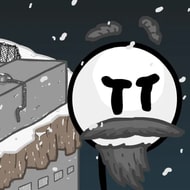
Henry Stickmin is strapped into a straightjacket, locked in a fortress carved into a snowy mountainside, and you’re the one deciding whether he tries to bluff his way past the guards or just punches through a wall. Fleeing the Complex hands you that choice every few seconds, and it rarely tells you in advance which option is the smart one.
The Wall in Fleeing the Complex Isn’t Just a Prison
The complex itself, known among fans as The Wall, is guarded by Right Hand Man, the imposing enforcer who answers directly to a much bigger problem for Henry: the Toppat Clan, a rival group of criminals who are trying to break into the exact same facility Henry is trying to break out of. That collision — one man escaping while an entire organization is breaking in — is what makes this particular episode play so differently depending on which branch you pick.
Every choice in the game splits into a new short scene, and a huge number of those scenes end in a fail. That’s not a design flaw — the fails are half the appeal, and plenty of players intentionally pick the worse-looking option just to see how badly it goes wrong before reloading and trying the branch they actually think will work.
Henry himself never speaks, which puts the entire comedic weight on staging and reaction rather than dialogue — a silent protagonist reacting to his own escape attempt going sideways is funnier, in this game’s hands, than any line of scripted banter could manage.
Reading the Room Before You Pick
The game rarely spells out consequences ahead of time, so players lean on context clues: how many guards are visible, whether Right Hand Man is already suspicious, whether the Toppat Clan’s presence has been noticed yet. Early choices tend to be forgiving, but once Henry is spotted, the branches narrow fast, and a decision that would have worked two scenes earlier stops being viable.
What players talk about most isn’t a single hardest choice — it’s the branching structure itself. Because outcomes carry forward into later Henry Stickmin episodes, fans treat Fleeing the Complex less like a one-off puzzle and more like the first domino in a much longer chain, and there’s real community debate over which branch counts as the “best” canon path versus which one is just the funniest to watch fail.
What Trips Up First-Time Players
New players tend to assume the straightforward, cautious-looking option is always safest, and that assumption gets punished constantly. Some of the messiest, least dignified-looking choices are the ones that actually get Henry out, while the confident options walk him straight into Right Hand Man.
Why People Replay Fleeing the Complex
Because so much of the game is built around watching every branch play out, replaying isn’t really optional if you want the full picture — it’s the intended way to experience it. Community guides exist specifically to map out every fail alongside every success, and comparing notes on which branch you hit first is a common conversation starter around this game.
Curious players often ask how many outcomes the episode actually holds, and the honest answer is more than a couple — clean successes and comedic fails are split across several choice points rather than one single fork, which is exactly why a single playthrough only shows a fraction of the writing. Others want to know who’s really standing in Henry’s way at The Wall: that’s Right Hand Man, enforcing security on behalf of whoever runs the facility, usually the last obstacle between Henry and an escape route the Toppat Clan hasn’t already blocked. And the question of whether landing on a fail branch wastes your time gets the same answer from most longtime fans — it doesn’t, since the writing leans into the comedy of things going wrong just as hard as it does the successes.
Fleeing the Complex works because it never lets a choice feel purely mechanical — every branch is written like its own small joke, whether Henry gets out clean or Right Hand Man catches him three seconds later. The game rewards curiosity over caution, and most players who actually finish it end up going back in just to see what The Wall looks like from the branch they didn’t pick.